Next.js
 Python
 Cloud
Cloud Security
 Ruby
Ruby Cpp
CppArticle
Kubernetes on Edge Day 2026: Planning for Disconnected Edge Operations
Kubernetes on Edge Day returns to Salt Lake City on November 9, 2026. Disconnected operation offers a practical way to distinguish local execution, central visibility, and preparation for updates.
Share
Koharu's reading tip
Break “works offline” into continued execution, restart, and reconnection. That gives you more concrete questions to bring to practitioner discussions.

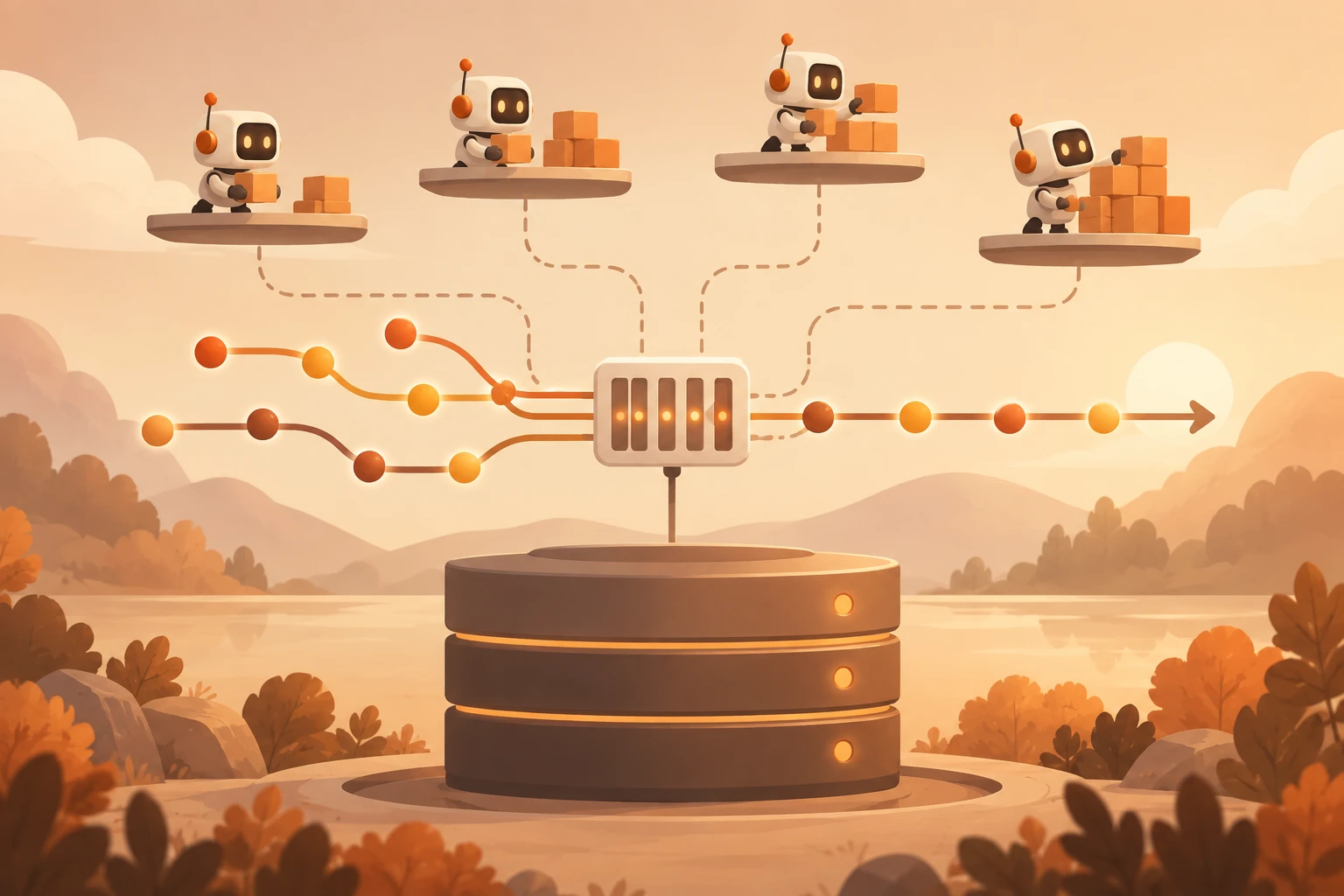
Local processing may need to continue while the cloud is unreachable. Extending Kubernetes to the edge therefore raises a question beyond placing containers: what should happen after connectivity disappears?
Kubernetes on Edge Day provides a place to explore that question with practitioners on November 9, 2026, in Salt Lake City, Utah. As a co-located event at KubeCon + CloudNativeCon North America 2026, it addresses building and operating infrastructure across distributed locations. CNCF event announcement
If you are considering attending, defining what your environment must keep running will help you interpret the experiences shared there. Disconnection gives us a useful path through local execution, visibility, and preparation for updates.
Disconnection separates Kubernetes visibility from local execution
Kubernetes uses Node status updates and Lease objects as heartbeats. When a node becomes unreachable, the node controller in the control plane sets its Ready condition to Unknown. Kubernetes node management
This tells us that the central system cannot establish the health of that node. It does not, by itself, prove that all local processing has stopped. Conversely, continued local execution does not imply that the central system has an up-to-date view.
Consider a connection failure between a processing device in a store and its central management platform. Treating “continue processing locally” and “report results centrally” as separate requirements makes the test objectives clearer. This is an illustrative scenario, not an announced conference case study.
One monitoring design to consider is observing business operation success separately from the time of the last received status update. Connectivity becomes part of how operators interpret the data.
Local metadata and prepared images support different needs
KubeEdge illustrates the implementation side of this distinction. It extends Kubernetes to the edge and identifies per-node metadata persistence and autonomous operation during cloud disconnection as design features. KubeEdge design features
Its MetaManager stores and retrieves edge metadata using SQLite. It also tracks cloud connectivity for operations such as remote queries. Keeping necessary information locally gives a concrete example of infrastructure supporting autonomy. The role of MetaManager
Stored metadata and the images needed to start containers are separate requirements. The K3s air-gap installation guide describes obtaining an image archive for the chosen version and CPU architecture, then placing it on each node. The binary must match the image version. K3s air-gap installation
KubeEdge and K3s are separate technical examples here, used to explain operational questions. They are not an integration recipe or a description of the event agenda. The practical question they suggest goes beyond continued execution: does the site hold the information and artifacts it needs for a restart or update?
Bring disconnection, restart, and reconnection questions to Edge Day
The Kubernetes on Edge Day announcement also highlights observability and security across distributed locations. To explore practitioner experiences through the lens of disconnection, consider bringing these questions. They are suggestions for preparation.
- Which operations must continue during disconnection, and which external service dependencies remain?
- After a restart while disconnected, where will required configuration and images come from?
- After reconnection, how will you determine when processing results and monitoring data have reached the central system?
For in-person attendance, check pass coverage as well. CNCF says the co-located events are included in the All-Access Pass and excluded from the KubeCon + CloudNativeCon Only Pass. Consult the official attendance guidance when registering.
The design decision is where to place the boundary between operations that must survive lost connectivity and those that can wait for its return. Expressing that boundary in your own requirements helps turn insights from Edge Day into implementation choices and specific validation work.
Source
- Title: Kubernetes on Edge Day returns to KubeCon + CloudNativeCon North America 2026
- URL: https://www.cncf.io/blog/2026/10/07/kubernetes-on-edge-day-returns-to-kubecon-cloudnativecon-north-america-2026/
Share
Related Articles
These articles share nearby categories or tags, so you can keep reading along the same thread.